
Creating Musical Stories
We often met people who, on hearing that we’re musicians, say something like “oh, that’s cool… I was never any good at it at school, though, and don’t know anything about classical!”
In primary schools, ‘doing music’ normally means playing instruments or singing. Participation in music is obviously crucial, but it doesn’t always come with a sense of why.
Some kids can also get left behind in activity sessions—especially quieter ones. And if you don’t take to it straight away, you might start to believe that music belongs only to others: the ‘musically talented’ ones.
This idea about talent or aptitude often takes root at an early age, and has a really long-lasting effect on how people see their relationship with music.
But enjoyment of music is not dependent on either knowledge or talent—and that includes classical music. It can be a real expertise, of course, and has vast depths to explore. But as an experience, it can and should belong to us all.
If you didn’t really ‘get’ music at school, that often result in feeling that classical music, especially, isn’t ‘yours’. This is usually associated with knowledge. But we think the biggest barrier is actually the absence of ownership.
Creating Musical Stories focuses on developing that sense of investment. We think this is a vital step that ‘grounds’ the meaning and value of practical music-making.
Fortunately, the irrepressible imagination of primary school kids gives them an ideal ‘way in’ to associating the live experience of music with stimulating creativity and involvement.
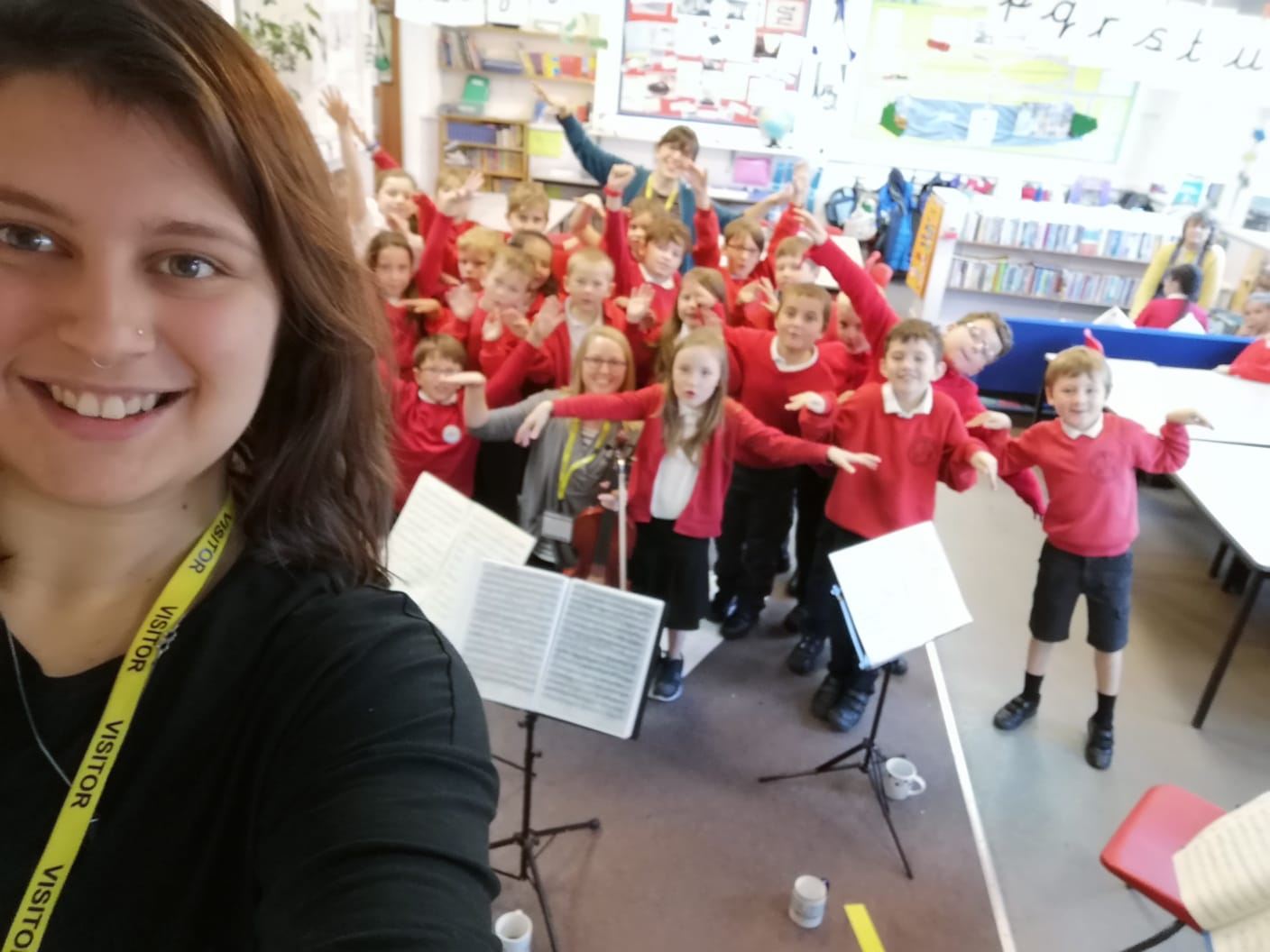
In 2018-20 we brought this approach to East Cornwall, working with over 300 KS2 pupils in 10 different schools. We gave the children permission to let their imaginations go wild, when listening and responding to a live string quartet (us!) play pieces by Haydn and Janacek. We helped them find ways of expressing their feelings through images, characters, and narrative, and they came up with fantastic ideas that were not arbitrary, but really connected with musical content and expression.
They worked as a team, bouncing their ideas off each other—sometimes engaging in protracted negotiations!—in developing their stories as a whole class. What they came up with genuinely belongs to them.
In the process, we smuggled in an intuitive understanding of lots of different aspects of music—including structure, gesture, dynamics, and much more— entirely without jargon or technical details. We hope they’ll remember their creations in the years to come, and that it nourished a sense of music’s meaning for many of them in ways that will last throughout their lives.
You can read the stories using the links below—these creations are life-affirming evidence of the power and value of music.
Read our participants’ stories